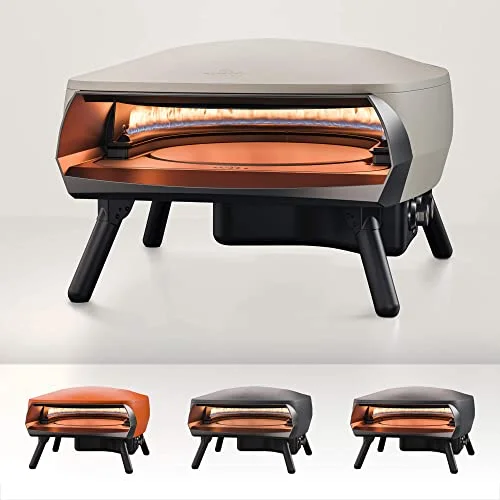
The single skill that trips up first-time pizza makers is not the dough or the launch, it is turning the pizza as it bakes so it cooks evenly. The Etna Rotante automates exactly that. Its rotating stone spins the pie slowly under the flame, which removes the deft peel work the other ovens demand. For anyone who wants great results from their very first pizza, that automation is genuinely valuable, and it is why this is our pick for beginners.
Who is the Witt Etna Rotante for?
The Etna Rotante is the right oven if you are new to making pizza, or you simply want a reliably even bake without the fuss. By turning the pizza for you, it lets you concentrate on the parts that are easier to learn, the dough and the launch, while it handles the part that takes practice. The built-in thermometer also takes the guesswork out of knowing when the stone is ready. Combined, those two features mean a first-timer can produce an evenly baked, properly cooked pizza far sooner than they would on a static oven. It is the most forgiving oven here for someone starting out.
It is less essential for experienced cooks who already have the peel-turning knack. If you can turn a pizza confidently by hand, the rotating stone is a convenience rather than a necessity, and you may prefer to put the money towards a cheaper static oven such as the Ooni Koda 16. The Etna Rotante's appeal is strongest for beginners and for anyone who values a consistently even bake over the lowest price.
How the Witt Etna Rotante performs
The rotating stone
This is the headline feature, and it works as promised. The motorised stone rotates the pizza slowly under the flame, so no single part of the crust sits in the hottest spot for too long. The result is an evenly leoparded base with no charred crescent on the side nearest the burner, which is exactly the fault that first-timers struggle to avoid by hand. It genuinely removes the hardest part of the job, and watching the pizza turn itself is oddly satisfying too.
Heat and the bake
The Etna Rotante reaches around 500°C, so it produces a proper fast Neapolitan bake, and the generous chamber takes a 13-inch pizza comfortably, a little more than the standard 12-inch ovens. The gas burner gives the same easy, dial-controlled heat as the other gas ovens here, so beyond the rotating stone it is a straightforward oven to run. The built-in thermometer is a thoughtful touch that helps beginners judge preheat and timing without buying a separate infrared gun.
Build and footprint
The Etna Rotante is well made and feels substantial, with a clear glass door that lets you watch the bake, which is reassuring while you are learning to judge timing. The trade-off is size: it has a larger footprint than the compact portable ovens, so it needs a bit more patio space. It is more of a stay-put oven than a grab-and-go one, which suits its role as a confidence-building oven for the home cook.
The honest downside: it is one of the priciest here
The Etna Rotante's main drawback is the price: the rotating mechanism and larger build make it one of the more expensive ovens in this comparison. If you already have peel-turning skills, you may not need what it offers, and a cheaper static oven would bake just as well in your hands. But for a beginner, or anyone who wants a guaranteed even bake without the learning curve, the automation earns its premium. It is a buy-once oven that builds your confidence rather than testing it.
Verdict on the Witt Etna Rotante
The Etna Rotante is our pick for beginners because it removes the one skill that trips up first-time pizza makers: turning the pizza. The rotating stone delivers an even bake automatically, the built-in thermometer takes the guesswork out of timing, and the gas heat is easy to control. It is one of the pricier ovens here, so experienced cooks who can turn a pizza by hand may not need it, but for anyone learning it genuinely earns its keep. If you are confident with a peel and want to spend less, the Ooni Koda 16 is the better-value all-rounder, and the Ninja Woodfire is the cheaper, more forgiving choice for a first oven. For more first-timer advice, read our guide for beginners and our buying guide.